
Nervousness when speaking
Pressure can disrupt breathing, structure and access to words when attention turns to you. Voice, pace and message can become less controlled even though the underlying ability is still present.
Does this feel like you?
 Book Diagnosis
The flagship
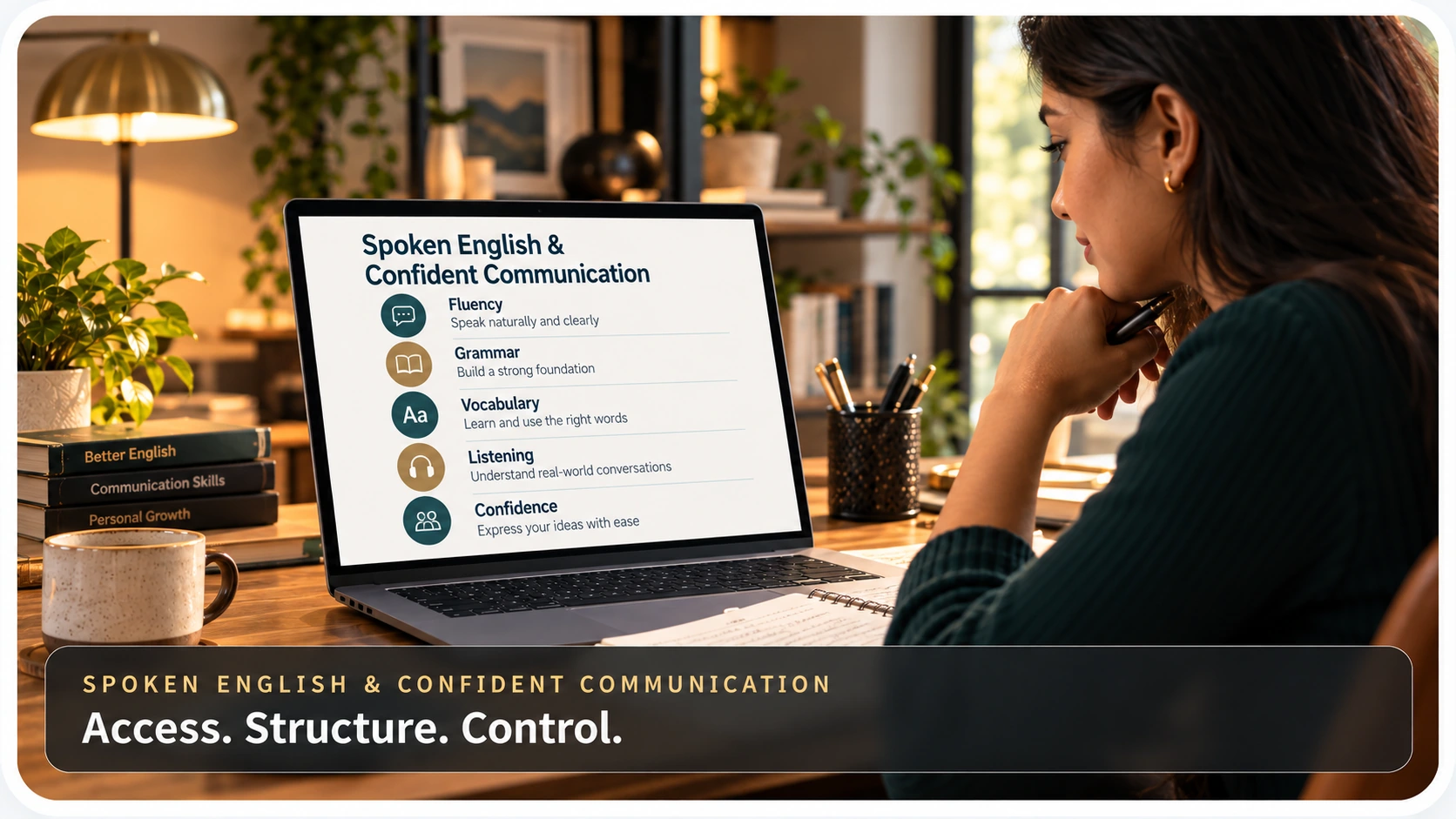
I help you find the right words, improve your grammar and vocabulary, and speak with greater confidence in everyday and professional conversations.
High-Pressure Communication (HPC) supports practice as conversations become more demanding.
No diagnosis fee. I message you on WhatsApp within 24 hours to confirm your 60‑minute diagnosis. Course fees are discussed only after it.
Pressure can disrupt breathing, structure and access to words when attention turns to you. Voice, pace and message can become less controlled even though the underlying ability is still present.
Does this feel like you?

Concern about making a mistake or looking incapable can cause someone to hold back, soften opinions or avoid speaking. Attention shifts from the message to self-protection.
Does this feel like you?

Unexpected questioning can increase retrieval pressure. A person may know the answer but struggle to access and structure it quickly when attention suddenly turns toward them.
Does this feel like you?

Under pressure, access to an intended thought can temporarily stall. Speech may stop even though the knowledge has not disappeared.
Does this feel like you?

Pressure can accelerate delivery before thoughts have been fully structured. Pace increases and clarity, emphasis and control can reduce.
Does this feel like you?

A response may begin clearly but become difficult to organize as pressure rises. The speaker may start adding ideas without maintaining a clear sequence.
Does this feel like you?

Too much simultaneous monitoring can compete with speaking itself. The speaker may edit, reconsider and evaluate while trying to communicate in real time.
Does this feel like you?

When attention becomes associated with evaluation, communication can become guarded. The speaker may focus more on how they are being perceived than on the message they are trying to deliver.
Does this feel like you?
WHAT'S HAPPENING
Under pressure, retrieval, pace, structure and control can begin to shift before the speaker consciously notices it.
You haven’t lost the ability. Pressure changes access to it.
What I train

Find the words you need, even when you're put on the spot.
How I coach you: ACCESS
You may know what you want to say, but sometimes the words just don't come when someone asks you a question. I work with you on vocabulary, sentence formation and recalling information while speaking. I use everyday conversations, unexpected questions and situations where you have little time to prepare. The goal is to help you express what you already know without constantly stopping or searching for words.

Turn your thoughts into clear, natural sentences.
How I coach you: STRUCTURE
Having ideas is one thing. Putting them into words that someone else can easily follow is another. I help you improve your grammar, organize your thoughts and connect sentences naturally. I use exercises where you explain experiences, answer questions and express opinions without making your responses unnecessarily long or complicated. You learn how to build an answer while speaking rather than memorizing everything beforehand.

Speak at your own pace, even when the pressure increases.
How I coach you: CONTROL
When you're nervous, you might speak too quickly, lose your train of thought or become conscious of every mistake. I help you improve your pace, pronunciation, pauses and overall delivery. I introduce conversations where you're interrupted, questioned or asked to explain something differently. The aim is to help you remain composed, speak more naturally and recover when a conversation doesn't go as planned.
Related insight: Why does my mind go blank when I have to speak?
PROGRAM FORMAT
Between sessions, you practice in real situations and bring them back for feedback and correction.
WHY THIS MATTERS
You may have the knowledge.
But when pressure rises, you may freeze, lose your structure, forget your words, or say less than you are capable of.
This can affect performance, confidence, and how others see you.
Real learners, real progress
I started communication training with Arjun about 30 days ago, and I've already noticed a significant improvement in my speaking. What sets him apart is that he doesn't follow a fixed training plan. Instead, he first understands your communication gaps, creates a personalized learning plan, highlights your mistakes, and patiently guides you until you improve.
I've gained confidence in public speaking and learned effective strategies for clear and engaging communication.
The training helped me enhance my spoken communication skills and boosted my confidence in public speaking. The trainers were supportive, patient, and provided constant feedback that helped me improve my pronunciation, clarity, and fluency. The sessions were interactive and engaging, creating a comfortable space to practice speaking without fear.
I just wanted to take the opportunity to thank Mr Arjun Lyngdoh for his support and helping hand... even though in a short period of time.... I was appreciated by all the house for the amazing Mc I've done....all credits goes to you Sir thank you so much.....
Questions before you begin
Spoken English & Confident Communication is typically completed in 6–8 weeks. The schedule is agreed with you. Further training may be recommended after the initial program and is agreed separately.
It is founder-led coaching that develops spoken English, grammar, vocabulary, natural sentence formation, and clear communication. You practice organizing thoughts and expressing them confidently in everyday and professional situations, with HPC supporting responses when attention or pressure rises.
It is for learners developing usable spoken English and clearer communication, including students, job seekers, and working professionals. The diagnosis identifies your language and communication needs. I coach live and one-to-one from Shillong, online across India.
Each session is live and one-to-one with me. After the diagnosis, you practice language and realistic conversations, receive specific feedback, and try again. The challenge increases according to your ability and objectives. Between sessions, you practice in real situations and bring back what was difficult. The NESkills method explains the steps.
Grammar and vocabulary support usable spoken English. You also practice listening, organizing thoughts, explaining ideas, and answering spontaneously. High-Pressure Communication (HPC) helps you maintain clarity as attention, interruptions, or pressure increase; the intensity is adapted to you.
Live online. Sessions are one-to-one on a video call, so you can join from anywhere in India or abroad. You need a stable internet connection, a quiet place to speak, and a device with a camera and microphone.
Spoken English & Confident Communication
A free communication diagnosis identifies where coaching should begin.
No diagnosis fee. Course fees are discussed only after your 60‑minute diagnosis. I message you on WhatsApp within 24 hours to confirm your session.